
The Righteous Mind: Why Good People Are Divided by Politics and Religion
of Jonathan Haidt
Description
An alternate cover edition of ISBN 9780307377906 can be found here.Why can’t our political leaders work together as threats loom and problems mount? Why do people so readily assume the worst about the motives of their fellow citizens? In The Righteous Mind, social psychologist Jonathan Haidt explores the origins of our divisions and points the way forward to mutual understanding. His starting point is moral intuition—the nearly instantaneous perceptions we all have about other people and the things they do. These intuitions feel like self-evident truths, making us righteously certain that those who see things differently are wrong. Haidt shows us how these intuitions differ across cultures, including the cultures of the political left and right. He blends his own research findings with those of anthropologists, historians, and other psychologists to draw a map of the moral domain. He then examines the origins of morality, overturning the view that evolution made us fundamentally selfish creatures. But rather than arguing that we are innately altruistic, he makes a more subtle claim—that we are fundamentally groupish. It is our groupishness, he explains, that leads to our greatest joys, our religious divisions, and our political affiliations. In a stunning final chapter on ideology and civility, Haidt shows what each side is right about, and why we need the insights of liberals, conservatives, and libertarians to flourish as a nation.
Gender
Main Characters
Book Details
- Format Hardcover
- Pages 419 pages
- Publisher Pantheon
- Publication Date March 13th 2012
- First Publication Not informed
- Language English
- ISBN 9999999999999
- Edition Not informed
- Category Non-Fiction
- Scenario []
Rate this work
🔒 Log in to evaluate this book.
Share your opinion with other readers. Your feedback is very important!
AI-Powered Recommendations
Based on your reading of "The Righteous Mind: Why Good People Are Divided by Politics and Religion", our dual AI algorithms suggest these titles. ⚡ FAISS Baseline 🧠 PyTorch Enhanced
Top Picks For You
🎯 Smart Selection
Peace Is Every Step: The Path of Mindfulness in Everyday Life
by Thich Nhat Hanh, Arnold Kotler (Editor), Dalai Lama XIV (Contributor)

Predictably Irrational: The Hidden Forces That Shape Our Decisions
by Dan Ariely

Mindfulness: An Eight-Week Plan for Finding Peace in a Frantic World
by J. Mark G. Williams, Danny Penman, Jon Kabat-Zinn (Foreword)
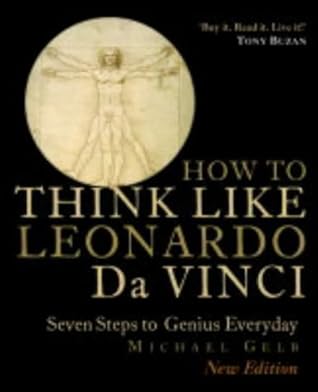
How To Think Like Leonardo Da Vinci: Seven Steps To Every Day Genius
by Michael J. Gelb (Goodreads Author)

How do we choose these recommendations?
Similar Style Recommendations
Books with similar themes, authors, and writing styles to what you're reading now.
Smart AI Matches
Our advanced AI finds books you might love based on deeper patterns and reader preferences.
FAISS Baseline
Fast & Reliable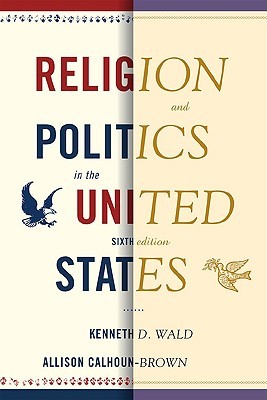

The Dictator's Handbook: Why Bad Behavior is Almost Always Good Politics
Bruce Bueno de Mesquita, Alastair Smith
Peace Is Every Step: The Path of Mindfulness in Everyday Life
Thich Nhat Hanh, Arnold Kotler (Editor), Dalai Lama XIV (Contributor)

