
The Philosopher and the Wolf: Lessons from the Wild on Love, Death, and Happiness
of Mark Rowlands
Description
This fascinating book charts the relationship between Mark Rowlands, a rootless philosopher, and Brenin, his well-traveled wolf. After acquiring Brenin as a cub, it quickly became apparent that Brenin was never to be left alone, as the consequences to Mark’s house and its contents were dire. As a result, Brenin and Mark went everywhere together—from classroom lecture to Ireland, England, and France. More than just an exotic pet, Brenin exerted an immense influence on Rowlands as both a person, and, strangely enough, as a philosopher, leading him to re-evaluate his attitude to love, happiness, nature and death. By turns funny (what do you do when your wolf eats your air-conditioning unit?) and poignant, this life-affirming book will make you reappraise what it means to be human.
Gender
Main Characters
Book Details
- Format Hardcover
- Pages 256 pages
- Publisher Pegasus Books
- Publication Date April 7th 2009
- First Publication 10/30/08
- Language English
- ISBN 9781605980331
- Edition Not informed
- Category Religion & Spirituality
- Scenario []
Rate this work
🔒 Log in to evaluate this book.
Share your opinion with other readers. Your feedback is very important!
AI-Powered Recommendations
Based on your reading of "The Philosopher and the Wolf: Lessons from the Wild on Love, Death, and Happiness", our dual AI algorithms suggest these titles. ⚡ FAISS Baseline 🧠 PyTorch Enhanced
Top Picks For You
🎯 Smart Selection


The Way to Love
by Anthony de Mello, J. Francis Stroud (Introduction)

How do we choose these recommendations?
Similar Style Recommendations
Books with similar themes, authors, and writing styles to what you're reading now.
Smart AI Matches
Our advanced AI finds books you might love based on deeper patterns and reader preferences.
FAISS Baseline
Fast & Reliable
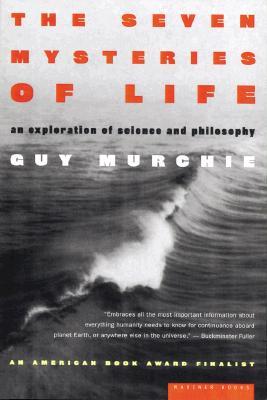
The Seven Mysteries of Life: An Exploration of Science and Philosophy
Guy Murchie


The Triumph of the Therapeutic: Uses of Faith after Freud
Philip Rieff, Elisabeth Lasch-Quinn (Introduction)
