
Dirty Havana Trilogy
of Pedro Juan Gutiérrez, Natasha Wimmer
Description
For the last four decades, Fidel Castro's communist Cuba has survived a harsh economic blockade. In 1993, Castro attempted economic reform by allowing Cubans to use U.S. dollars and begin their own business ventures—"a huge messy free-for-all." This time of confused, low-rent capitalism is the backdrop for Pedro Juan Gutierrez's gritty, powerful, and atmospheric novel-in-stories, Dirty Havana Trilogy, translated from the original Spanish version by Natasha Wimmer.Gutierrez, whose prose sings of grime and simple, hard-clay truths, much like the words of Junot Díaz, is a well-known member of the Latin American visual poetry movement and a magazine journalist living in Havana. Dirty Havana Trilogy is written from the semiautobiographical point of view of Pedro Juan, a 40-year-old sex-starved ex-radio journalist cobbling together an existence by selling everything from himself to drugs to whatever he can get his hands on. "Everything's worth something here," he writes.Pedro Juan is an ex-radio journalist because in a "model" communist society nothing bad is acceptable news. Through his tormented lead character, Gutierrez provides a window into his reasons for writing such a crude book. "That's why I was disillusioned with journalism and why I started to write raw stories.... I write to jar people a little and force others to wake up and smell the shit.... That's how I terrorize cowards and mess with people who like to muzzle those of us who speak up.... My stories could run bare-assed out into the middle of the street, shouting, 'Freedom, freedom, freedom.'"That said, be warned: Dirty Havana Trilogy is not for the faint of heart. It is raw, squarely confronting poverty, racism, violence, prostitution, and the lengths Cubans go to in order to secure the almighty buck. In one story, the man who lives across the hall from Pedro Juan, in the crumbling apartment building that serves as the focal point for much of the book, is busted by the cops for stealing human livers from the morgue and selling them on the streets as pork livers.But survival isn't the only thing on the minds of Gutierrez's colorful characters. Oddly enough, it's the quest for release, for fits of pleasure, for some sliver of happiness no matter how warped the avenue may seem to the world outside Havana. And that quest is manifested in the hard-core sex that permeates the pages of the book. An orgasm is one of the few pleasures no one can be denied. As violent and nauseating as the sex -- and the life -- may seem on the surface, Gutierrez achieves the difficult task of lifting his characters from the muck, giving his Dirty Havana Trilogy an intellectual and emotional depth that far outweighs the carnal.Near the end Gutierrez writes, "Born in the ruins, they just kept trying not to give up or let themselves be beaten so severely that at last they were forced to surrender. Anything was possible, everything allowed, except defeat." The book then becomes a manifesto, a well-wrought fight against literary persecution, a release the same as an orgasm, where the truth behind every dark corner, behind every door, must be told. Dirty Havana Trilogy comes from the same womb in which literature was born, a book that just may someday be held up beside those of the mighty dead.Nelson Taylor is a freelance writer and author of the travel guide America Bizarro, published by St. Martin's Press.
Gender
Main Characters
Book Details
- Format Paperback
- Pages 392 pages
- Publisher Ecco
- Publication Date February 5th 2002
- First Publication 10/29/94
- Language English
- ISBN 9780060006891
- Edition Not informed
- Category Fiction
- Scenario ['Havana (Cuba)']
Rate this work
🔒 Log in to evaluate this book.
Share your opinion with other readers. Your feedback is very important!
AI-Powered Recommendations
Based on your reading of "Dirty Havana Trilogy", our dual AI algorithms suggest these titles. ⚡ FAISS Baseline 🧠 PyTorch Enhanced
Top Picks For You
🎯 Smart Selection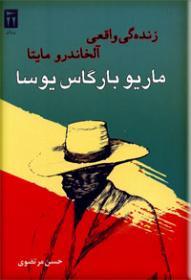
زندهگی واقعی آلخاندرو مایتا
by Mario Vargas Llosa, حسن مرتضوی (Translator)


El Señor Presidente
by Miguel Ángel Asturias, Alejandro Lanoël-d' Aussenac (Editor)


How do we choose these recommendations?
Similar Style Recommendations
Books with similar themes, authors, and writing styles to what you're reading now.
Smart AI Matches
Our advanced AI finds books you might love based on deeper patterns and reader preferences.
FAISS Baseline
Fast & Reliable

Terra Nostra
Carlos Fuentes, Margaret Sayers Peden (Translator), Milan Kundera (Afterword), Jorge Volpi (Introduction)

